
COVID-19
What is COVID-19?
COVID-19 is the disease caused by a new coronavirus called SARS-CoV-2. WHO first learned of this new virus on 31 December 2019, following a report of a cluster of cases of ‘viral pneumonia’ in Wuhan, People’s Republic of China.
The most common symptoms of COVID-19 are fever, dry cough, and fatigue. Other symptoms that are less common and may affect some patients include loss of taste or smell, nasal congestion, conjunctivitis (also known as red eyes), sore throat, headache, muscle or joint pain, different types of skin rash, nausea or vomiting, diarrhea, chills or dizziness.
Symptoms of severe COVID‐19 disease include shortness of breath, loss of appetite, confusion, persistent pain or pressure in the chest, high temperature (above 38° C).
How does it spread?
The virus that causes COVID-19 is mainly transmitted through droplets generated when an infected person coughs, sneezes, or exhales. These droplets are too heavy to hang in the air, and quickly fall on floors or surfaces. You can be infected by breathing in the virus if you are within close proximity of someone who has COVID-19, or by touching a contaminated surface and then your eyes, nose or mouth.
The first mass vaccination program started in early December 2020. At least 13 different vaccines (across 4 platforms) have been administered, i.e., Pfizer/BioNtech Comirnaty vaccine, SII/Covishield and AstraZeneca/AZD1222 vaccines, Janssen/Ad26.COV 2.S, Moderna COVID-19 vaccine (mRNA 1273), and Sinopharm COVID-19 vaccine.
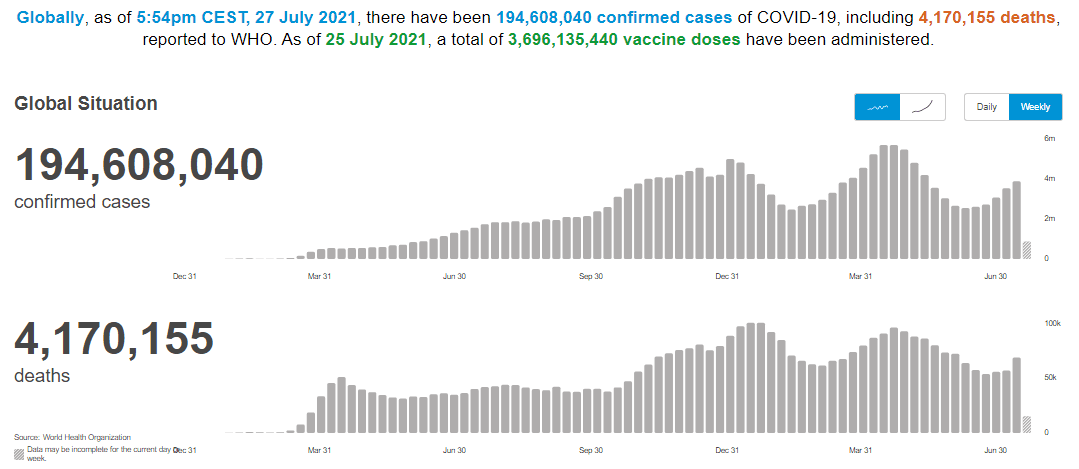
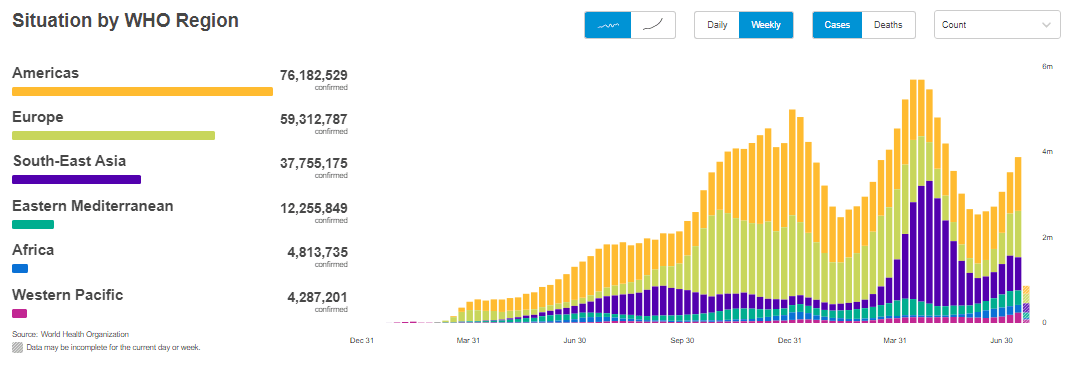
Cases overview
How to prevent?
If COVID-19 is spreading in your community, stay safe by taking some simple precautions, such as physical distancing, wearing a mask, keeping rooms well ventilated, avoiding crowds, cleaning your hands, and coughing into a bent elbow or tissue. Check local advice where you live and work. Also, get vaccinated!
Stay home and self-isolate even if you have minor symptoms such as cough, headache, mild fever, until you recover. Call your health care provider or hotline for advice. Have someone bring you supplies. If you need to leave your house or have someone near you, wear a medical mask to avoid infecting others.
How does it affect our life?
The COVID-19 pandemic has led to a dramatic loss of human life worldwide and presents an unprecedented challenge to public health, food systems and the world of work. The economic and social disruption caused by the pandemic is devastating: tens of millions of people are at risk of falling into extreme poverty.
Also, many countries have decided to close schools, colleges and universities. In response to school closures, UNESCO recommended the use of distance learning programs and open educational applications and platforms that schools and teachers can use to reach learners remotely and limit the disruption of education.
Nowadays, online learning has become a critical lifeline for education, as institutions seek to minimize the potential for community transmission. Technology can enable teachers and students to access specialized materials well beyond textbooks, in multiple formats and in ways that can bridge time and space. Many schools across the world began conducting classes via videotelephony software such as Zoom, Google Classroom and/or Google Meet.
However, lack of access to technology or fast, reliable internet access can prevent students in rural areas and from disadvantaged families. This is an obstacle to continued learning, especially for students from disadvantaged families. Teachers have reported that students are more likely to complete assignments if they have access to internet at home.
Source:
- https://www.who.int/
- https://en.wikipedia.org/wiki/Impact_of_the_COVID-19_pandemic_on_education#Online_learning